What happens in our brain when we play? The Neuroscience of Play in Dementia Care
What happens in the aging brain during play? Learn what play does to the brain and why it is a vital tool for emotional regulation and connection in dementia care.

Most people tend to think that play is a child’s thing. Something that we do when we’re young, but that as adults we simply “grow out of.” Play is often associated with childish, immature behaviour. With “un-seriousness.” But neuroscience says otherwise.
The impulse to play comes from a deep, primitive part of our brain — it’s essential for our survival. Humans are biologically designed to play, from our first years of life until our final ones. So although many stop playing as they grow older, play continues to be essential for our cognitive and emotional health.
But why exactly is play so important for our brain’s well-being?
What happens inside our brains when we play?
Dopamine and serotonin are released
Play activates the brain’s “seeking” and reward systems, causing the release of dopamine and serotonin. Dopamine, the hormone related to pleasure and motivation, keeps the brain focused and active. Serotonin, also known as the “happiness hormone,” helps with mood regulation and increases cognitive function.

Our cognitive focus sharpens
The locus coeruleus, the brain’s internal spotlight, comes to life during playtime. When we engage in any interactive play that involves surprise or something new, this part of the brain stem activates and releases norepinephrine, a chemical that helps us focus better. It clears away mental fog, helps the brain process information quicker, and can help counteract age-related cognitive decline.
Stress levels decrease
Play time, chill time! Research shows that playing can lower our levels of cortisol, the stress hormone. Lowered cortisol helps the brain tackle feelings of overwhelm, which then calms the body’s nervous system.
Neural connections become stronger
Playing makes our neurons trigger a stream of activity across our higher brain functions. Every time we participate in a game, we are helping those neurons create long-lasting, stronger connections over time (a process known as neuroplasticity.) This means that the more we play, the better control we can have over our movements, our thoughts, and our emotions.
Play: The ultimate insurance for a healthy mind
The neurological effects of playing are not just isolated events. They are actually building something much larger: a healthier neural network. Every time we play, it’s as if we were making “deposits” into what scientists call the cognitive reserve: a mental safety net that keeps our brains resilient, even as we grow older.
For the elderly, this means that play does not only provide moments of fun, but also a structural defense that keeps the mind resilient and adaptable (and the spirit joyful and positive!) Adopting play as an everyday part of life helps our brains stay active, connected, and healthy into the later stages of life.

Why play is essential in dementia care
Perhaps the best example of the power of play can be seen in dementia care. The biggest challenge in dementia is not the memory loss itself, but apathy and social withdrawal. Because dementia can cause the “motivation” centers of the brain to go dormant, it’s very common to find people with dementia sitting in silence, disconnected from their surroundings.
But by tapping into instinct, play can make this apathy fade away. Research proves that when seniors with dementia participate in playful activities, they experience a significant boost in social interaction and emotional resilience. It can even serve as a gentle non-pharmacological tool for redirection during difficult moments of confusion or “sundowning.”
Implementing Play in Care Homes: From Traditional Activities to ‘Warm Technology’
Many care facilities are already integrating play into their daily routines to elevate the quality of care they offer. ‘Warm technology’ tools, like the Tovertafel, offer care homes a way to bring structured, easy-to-start play with real benefits.
Also read: How the Tovertafel improved resident engagement at Good Samaritan – Prairie Creek
Designed specifically for seniors living with dementia, the Tovertafel projects light-based games onto any flat surface. These games trigger the very brain functions we explored, increasing physical activity, encouraging social interaction, and combatting apathy and other behavioural expressions associated with BPSD.
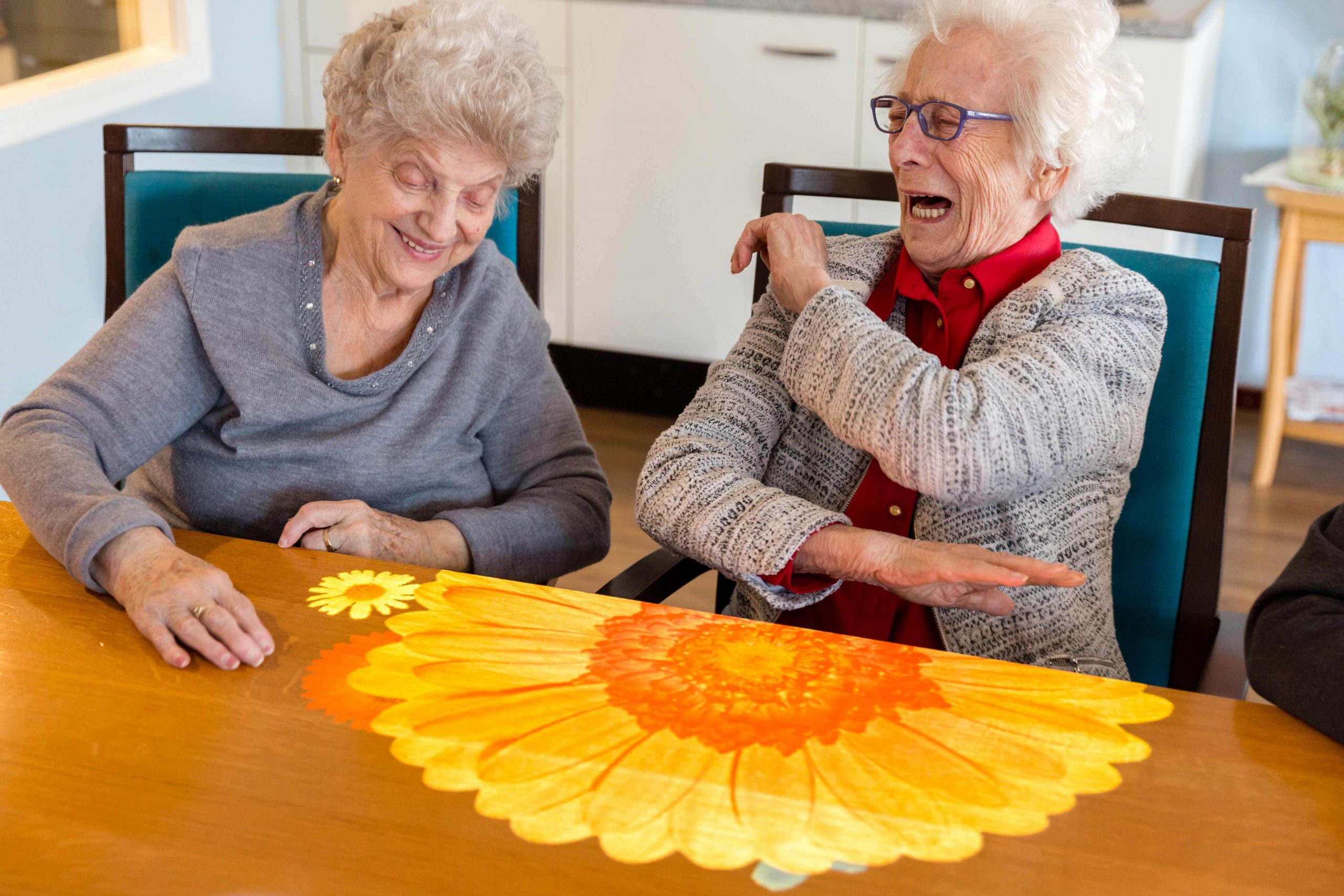
By bringing play into the common room, the Tovertafel helps transform care homes into brighter places, where movement, connection and joy are possible.
Ready to bring the power of play to your residents? Get in touch with us to arrange a Tovertafel demonstration and discover how it can help improve the quality of life for your residents and care staff.